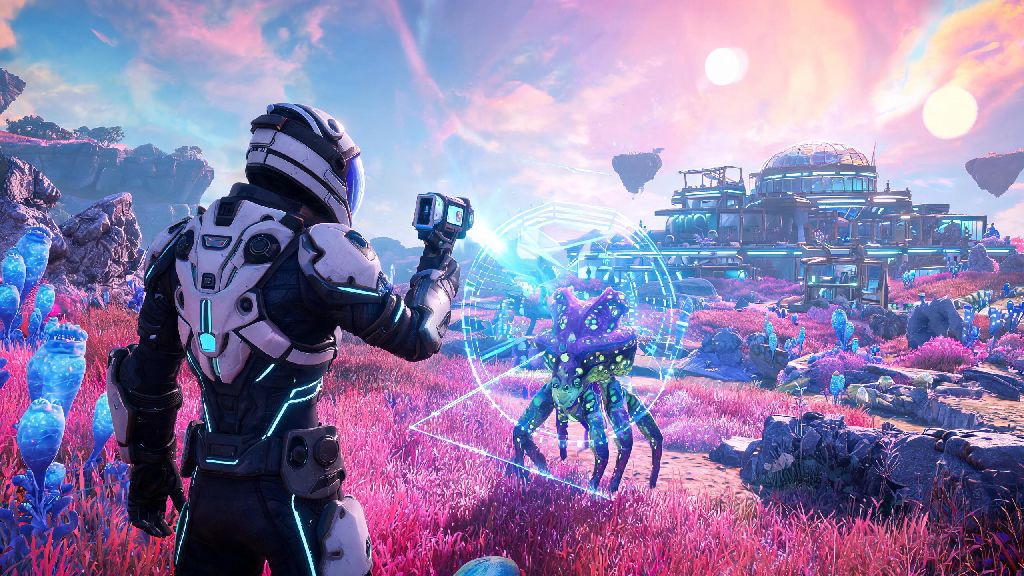
If you’ve spent even a few hours bouncing between star systems in No Man’s Sky, you know the frustration of landing on a world that looks promising from orbit, only to be greeted by toxic rain, aggressive sentinels, and barely any useful resources. I’ve wasted dozens of warp cells chasing pretty blue planets that turned out to be uninhabitable nightmares, so I’ve spent years refining my process for finding worlds worth sticking around on. This guide breaks down exactly how to find a good planet in No Man’s Sky, no random luck required, whether you’re looking for a home base spot, a rare resource farm, or just a pretty place to take screenshots.
Start With System Scanning Before You Even Warp
You don’t have to waste warp cells jumping into random systems to find great planets. The galaxy map has built-in filters that let you narrow down your search before you ever leave orbit of your current world. First, set your filter to prioritize systems with at least 4 planets, as more planets per system means higher odds of finding one that fits your needs. Economy and conflict level filters are also non-negotiable for most players: low conflict systems have far fewer pirate attacks, and almost all planets in these systems have lower sentinel aggression levels.
Once you warp into a new system, don’t land on the first planet that catches your eye. Pull up your starship scanner to ping every planet and moon in the system first. Each result will show you the planet’s general biome, resource types, and basic threat level before you commit to a landing. Planetary description pop-ups will even flag extreme weather, high sentinel activity, and rare resources like activated indium so you can skip duds immediately. I usually skip any system with fewer than 3 non-extreme planets, as it’s just not worth the time to explore them fully.
Key Metrics to Prioritize When Evaluating a Planet
Every player has different priorities for their perfect planet, but there are a few core metrics you should always check before you drop a base computer. These factors will determine how easy or frustrating it is to spend time on the world long-term, whether you’re building a small outpost or a massive multiplayer base complex.
- Sentinel activity level: “Low” or “None” is ideal for base building, as you won’t be harassed while gathering resources or building. “Aggressive” or “Frenzied” sentinels are only worth dealing with if the planet has extremely rare resources that you can’t find anywhere else.
- Weather severity: “Calm” or “Mild” weather means you won’t need to constantly refill your hazard protection, even if you’re exploring for hours. Extreme weather planets can have rare storm crystals, but they’re not a good fit for permanent bases unless you love the challenge of constant survival.
- Native resource pool: Check if the planet has all the basic resources you use regularly: carbon, ferrite dust, sodium, and oxygen. If you have to warp to another system just to get basic building materials, it’s not a practical home planet.
- Fauna and flora diversity: If you’re a completionist or want to earn extra units from hunting or farming, a planet with 10+ fauna species will give you plenty of goals to work toward long-term. Tameable creatures are also a huge plus if you play with friends.
I used to ignore the fauna count when I first started playing, but I quickly realized that a diverse planet feels far more alive to spend time on. If you’re playing with friends, having unique creatures to tame and ride makes group exploration way more fun, too. You don’t need all of these metrics to be perfect, but hitting at least 3 of your top 4 priorities will make the planet worth sticking around on.
Use In-Game Tools to Speed Up Your Search
Hello Games has added dozens of quality of life tools over the years that make planet hunting way faster than it was at launch. The first tool you should unlock is the Survey Device, which you get early in the construction mission line. This tool lets you scan for resource hotspots, building-friendly terrain, and even natural power sources like wind and solar hotspots within minutes of landing on a planet.
If you have an Exocraft, make sure you install the full scanner upgrade for it. The upgraded Exocraft scanner can cover huge swathes of the planet in a fraction of the time it takes to walk or fly your starship, and it will flag all nearby resources and points of interest automatically. I also always carry a signal booster in my inventory: placing one down will show you nearby abandoned bases, trade posts, and even existing player bases that you can repurpose or use as a starting point for your own build.
For players specifically looking for lush, habitable planets, try warping to systems with Gek dominant populations. From my experience, Gek systems have a 30% higher chance of spawning temperate, grassy planets than Korvax or Vy’keen systems. You can see the dominant species of any system right on the galaxy map, so you don’t have to guess before you warp.
How to Confirm a Planet Is Worth Settling Long-Term
Even if a planet checks all your boxes on the initial scan, it’s smart to spend at least 30 minutes exploring it before you drop a permanent base computer. First, walk or drive through at least 3 different biomes on the planet to make sure the weather and sentinel activity stay consistent across the whole surface, not just the area you landed in. I once landed on a planet that was calm and had no sentinels in the starting zone, but 10 minutes away there was a permanent extreme heat biome that covered 70% of the surface, so it was useless for long-term exploration.
Test out gathering basic resources while you’re exploring too. If you have to walk 10 minutes just to find a single carbon tree or sodium deposit, the planet will be a headache to live on long-term. Check for natural power sources too: if the planet has frequent wind or high solar intensity, you won’t have to spend extra resources building fuel generators for your base. Flat, open terrain is another huge plus, especially if you want to build large structures or farms later on. Mountainous planets look cool, but you’ll spend hours just flattening terrain to build a small base, which gets old fast.
If you play multiplayer, bring your friends along for the test run too. What feels like a perfect planet for you might feel boring or too small for your group, so getting everyone’s input before you commit to building will save you from having to move later. I once spent 20 hours building a base on a lush planet only to have my friend point out it had no flat space for our shared farm, so we had to abandon it entirely.
At the end of the day, what counts as a “good” planet is totally up to what you want out of your No Man’s Sky playthrough. Some players love the challenge of surviving on extreme radiation worlds with rare resources, while others just want a quiet, green planet to build a farm and watch the sunset. Once you get the hang of filtering systems, scanning planets before you land, and testing out worlds before you commit, you’ll be able to skip all the duds and find spots that fit your playstyle perfectly. Don’t be afraid to warp through a few extra systems to find exactly what you want – the time you spend learning how to find a good planet in No Man’s Sky will save you hours of frustration later on.