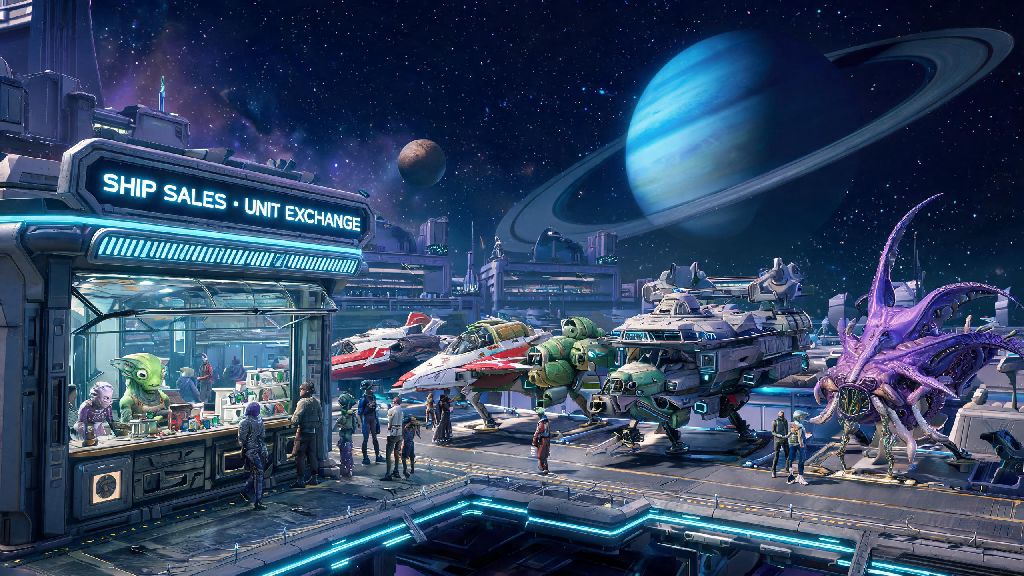
I still remember the first time I warped to a new star system in No Man’s Sky and realized I was the first person to ever set foot there. That sense of uncharted territory is the core of what makes the game so addictive, but it also leaves a lot of players asking: how many star systems in No Man's Sky are there actually to explore? The answer isn’t as simple as a fixed number, but we’re breaking down everything you need to know about the game’s galaxy size, generation rules, and how many of those systems you can actually visit in a playthrough. Even after 300 hours of logged playtime, I’m still learning new quirks about how the game populates its universe, so I’ve included all the practical tips I’ve picked up along the way.
How Many Star Systems in No Man's Sky Are Officially Generated?
If you’ve ever looked up star system counts for the game, you’ve probably seen a massive number thrown around, and it’s not an exaggeration. The official total of procedurally generated star systems in No Man's Sky sits at just over 18 quintillion. That number comes from the game’s fixed 64-bit seed algorithm, which generates every system, planet, creature, and resource on the fly based on its galactic coordinates. Unlike many open world games that pre-load all their content, No Man’s Sky only generates system data when you or another player first travels close to it, which saves massive amounts of storage space while keeping every player’s discovery experience consistent.
To put that number in perspective, if you visited one new system every second without stopping, it would take you more than 570 billion years to see every single one. That’s longer than the current age of the real universe, so no player will ever come close to exploring the full pool. Even the most dedicated No Man’s Sky content creators rarely cross 10,000 unique system visits across years of play, so you never have to worry about running out of new areas to explore.
What Determines a Star System’s Unique Traits?
Every star system isn’t just a random collection of planets, either. The algorithm uses a set of consistent rules to assign traits to each system, so you can hunt for specific types based on your playstyle needs. All core traits are visible from your galaxy map before you warp, so you don’t have to waste warp cells on systems that don’t fit what you’re looking for. The main factors that shape each system include:
- Star type: O, B, A, F, G, K, and M class stars, plus rare exotic and red giant variants, each tied to specific rare resource drops and lush planet spawn odds
- System economy: Ranging from poor to opulent, with higher-tier economies offering better trade prices, higher spawn rates for S-class ships, and rarer crafting materials
- Conflict level: Low, medium, or high, which dictates how often you’ll face pirate ambushes in space and how aggressive sentinels are on planets in the system
- Dominant alien race: Vy’keen, Gek, Korvax, or fully uncharted systems with no permanent inhabitants, each offering unique mission lines and faction reputation rewards
You can filter your galaxy map to only show systems that match your desired traits once you unlock the upgraded warp drive early in the main story. For example, if you’re grinding for units via trade, you can set the filter to only show opulent economies, and if you’re looking for a quiet base building spot, you can filter for low-conflict, Gek-dominant systems that have high numbers of lush, non-toxic planets.
How Many of These Star Systems Are Accessible to Players?
While 18 quintillion systems exist in the game’s procedural generation pool, not all of them are equally easy to reach, and some require specific upgrades to visit. First, you start in the Euclid galaxy, which is just one of 255 total unique galaxies you can travel to by reaching the center of your current galaxy or using a special glyph portal. Each galaxy has its own generation bias, so for example, the Eissentam galaxy has far higher rates of lush, habitable planets than Euclid, while the Calypso galaxy has higher conflict levels and more rare resource spawns.
While every generated star system is technically accessible, most players will never visit more than a few thousand even across multiple playthroughs. If you’re curious about how many star systems in No Man's Sky have actually been discovered by the global player base as of now, estimates sit at around 100 million, which is still less than 0.000001% of the total generated pool. Most players stick to a small cluster of systems once they set up a main base, since traveling across the galaxy takes time and resources, and you can get all the materials you need from a 20 to 30 system radius around your home base for most late-game crafting.
You can also jump directly to any system that another player has shared coordinates for, even if it’s on the other side of the galaxy, using glyph portals. That’s how large community groups like the Galactic Hub have built shared community spaces in specific systems, with thousands of players contributing to base building, resource farming, and discovery documentation in the same small cluster of systems.
Tips for Tracking Your Star System Discovery Progress
If you’re the type of player who likes to track your exploration milestones, the game has built-in tools to help you keep count of how many systems you’ve visited, plus a few tricks to make discovery runs more efficient. Make sure to upload every system you discover to the game’s server as soon as you arrive — this earns you a small stack of nanites, and attaches your username to the system permanently for any future players who visit it. You can see your total discovery count at any time in the discovery tab of your main menu, which breaks down your visits by system, planet, fauna, and flora.
If you’re trying to hit a specific discovery goal, like 1,000 unique systems, you can filter your galaxy map to only show undiscovered systems to avoid accidentally revisiting areas you’ve already been to. If you’re hunting for rare system types, like exotic systems that spawn living ships, you can use a signal booster on any planet to pull coordinates for nearby uncharted systems with higher rare spawn odds. This cuts down on a lot of random warp time if you’re looking for specific gear or resources.
One important note to remember: if you play offline, your system discoveries won’t be saved to the game’s central server, so you’ll lose all your discovery progress if you reinstall the game or switch devices. It’s best to stay connected to the internet when you’re running exploration routes, so you don’t lose hours of discovery progress to a game crash or save file error.
At the end of the day, the exact number of how many star systems in No Man's Sky exist is less important than the sense of wonder that comes from knowing you can always find somewhere new to explore. Whether you’re a casual player who only visits a handful of systems a month or a dedicated explorer trying to hit 10,000 unique discoveries, the game’s procedural generation ensures you’ll never run out of new planets to land on, new creatures to scan, and new secrets to uncover. You don’t have to try to visit every system to get the most out of the game, either — even sticking to a small cluster of systems can give you hundreds of hours of content if you take the time to fully explore every planet and complete all the local faction missions.