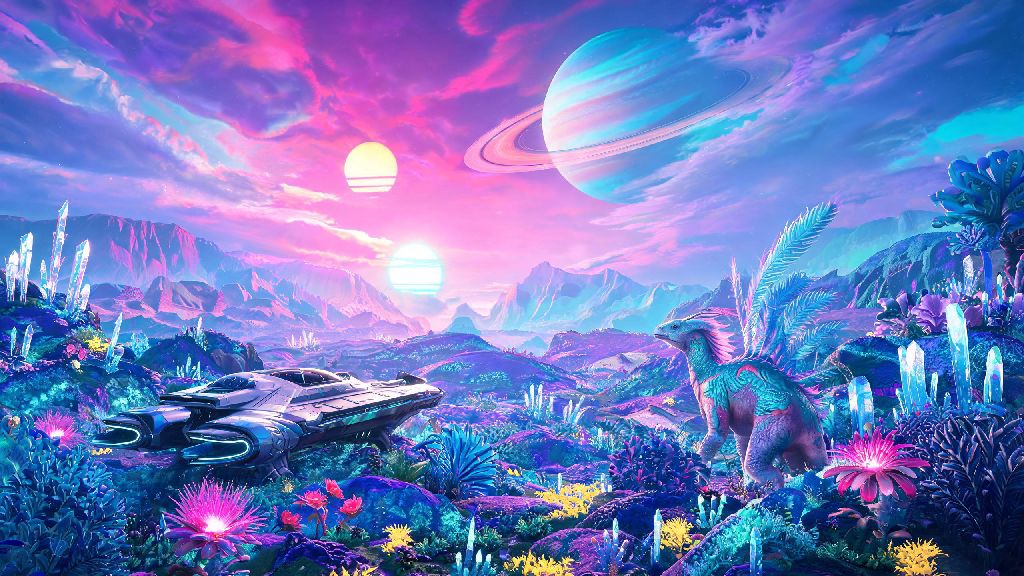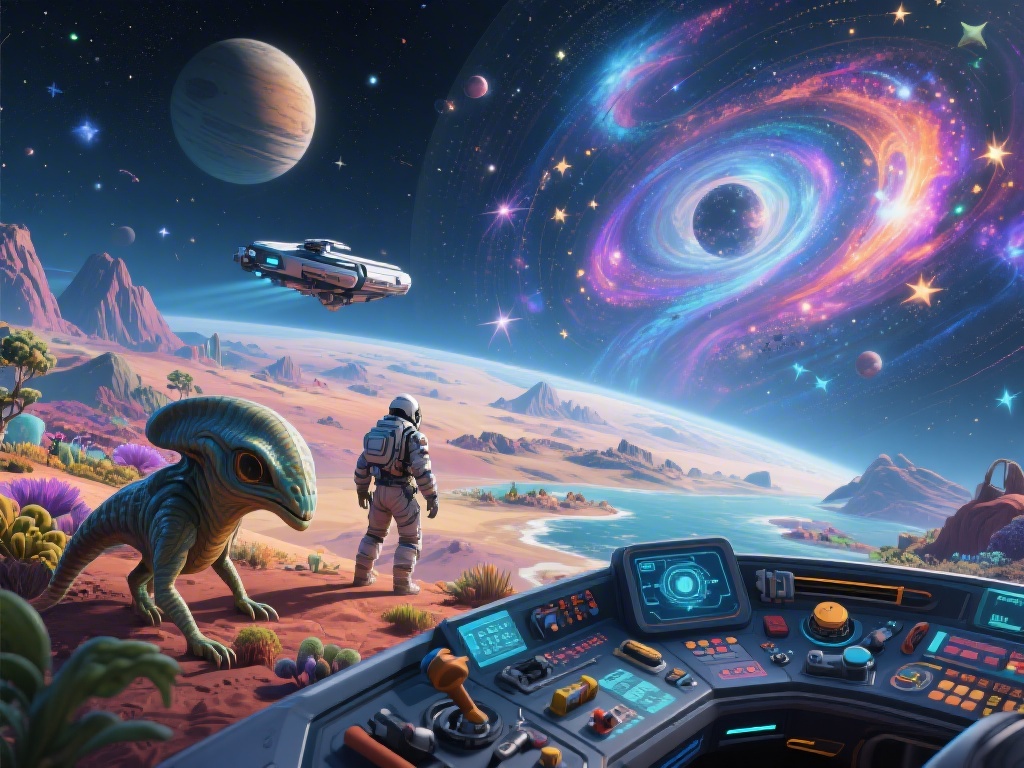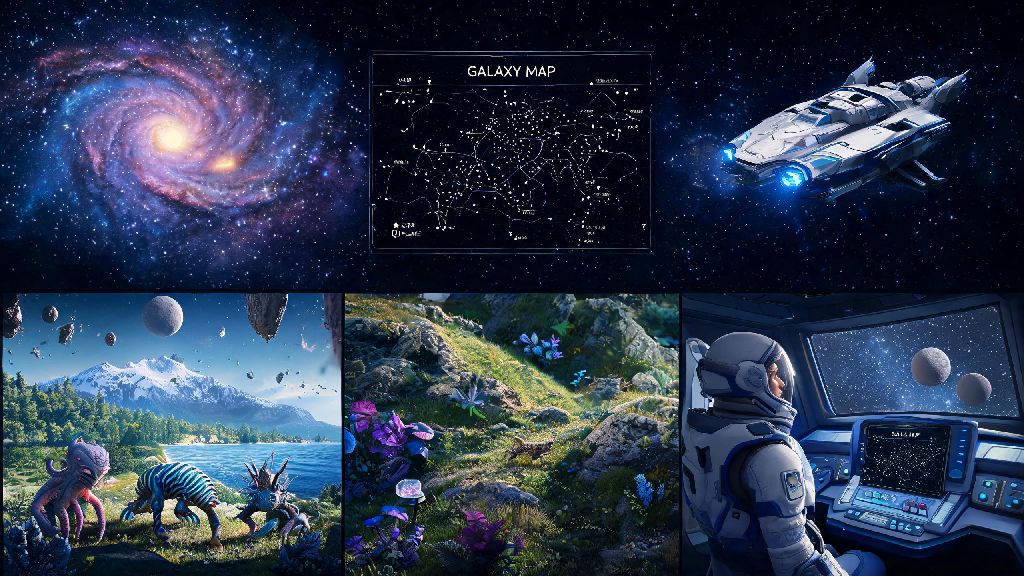
I still remember the first time I booted up No Man’s Sky, spawned on a toxic ice planet, and stared up at three moons hanging in the purple sky. I’d heard rumors of the game’s massive scale, but it didn’t click until I tried to warp to the nearest star system and realized I was looking at just one tiny dot in a galaxy of billions. If you’ve ever sat staring at your galaxy map wondering how is No Man's Sky so big, you’re not alone. The game’s 18 quintillion explorable planets aren’t just a marketing gimmick—they’re the result of decades of game design experimentation and clever technical shortcuts that feel almost like magic when you’re playing.
How is No Man’s Sky So Big? It Starts With Procedural Generation
Procedural generation is far from a new trick in game development, but Hello Games refined it to a degree no other studio had pulled off before No Man’s Sky launched. Instead of hand-building every planet, character, and landscape the way most open world games do, the team built a single, fixed mathematical algorithm that generates all content on the fly as you play. You could visit one planet every second for the rest of your life and you’d never see even 1% of the total available planets, and that’s by design.
The algorithm doesn’t just spit out random nonsense, either. It follows strict, consistent rules that make every planet feel cohesive and lived in. Every planet’s terrain, flora, fauna, weather, and even resource distribution is generated using this fixed formula instead of being stored on a server or your device’s hard drive. That means the game doesn’t need terabytes of storage space to hold all that content—all it needs to store is the formula itself and the coordinates of whatever planet you’re currently visiting. I once spent 3 hours tracking a weird floating deer creature on a radioactive planet, and later found a post from another player who found the exact same species 2 years prior, which blew my mind.
Smart Modular Asset Reuse Cuts Bloat Without Feeling Repetitive
Procedural generation can only do so much if you don’t have good base assets to work with, and Hello Games put years of work into building a library of parts that can be mixed and matched in almost endless combinations. You’ll never see the exact same creature twice in 400 hours of play, but you might recognize a familiar claw shape or leaf pattern on a new planet, and that’s intentional. Hello Games built a library of thousands of modular asset parts that the algorithm can mix and match at random to create unique content every time.
These parts are designed to work together across all biomes, so you almost never get a creature or plant that looks physically impossible (though the occasional bug with floating heads or upside-down trees still pops up from time to time). The modular system covers almost every part of the game’s world, including:
That mix of fixed base parts and random combination means you’ll rarely get bored of exploring, even if you stick to one galaxy for your entire playthrough. I’ve put over 400 hours into the game across multiple saves, and I still stumble on new creature variants that make me stop and snap a screenshot for my collection.
Massive Scale Was Baked Into the Game’s Core Lore From Day One
A lot of people assume the game’s size is just a technical flex to get media attention, but it’s actually a core part of the story Hello Games wanted to tell from the very start of development. The team didn’t build a standard open world game and then decide to make it bigger later—they built the entire tech stack around the idea that players should feel tiny and insignificant in a vast, mysterious universe. The entire premise of No Man’s Sky’s lore revolves around the mystery of the Atlas and the endless, simulated universe it created, and that story wouldn’t land if the universe only had a few hundred planets to explore.
Even the much-maligned 2016 launch version of the game had the full 18 quintillion planet universe intact, even if most of those planets felt empty and lacked content. All the major updates over the past 8 years, from base building to space fleets to cross-platform multiplayer, have just added more things to do in that existing massive universe, instead of expanding the universe itself. I still think the first time you warp to a new galaxy after finishing the main Atlas path is one of the most underrated moments in gaming, because you realize you’ve barely scratched the surface of what’s out there.
Serverless Design Removes Limits On Player Exploration
Most live service open world games hit hard limits on size because all the world data has to be stored on central servers, and adding more space costs the studio more money over time. No Man’s Sky avoids that problem almost entirely, because almost all of the game’s content is generated locally on your PC or console instead of being pulled from a server. Because all planet data is generated locally on your device instead of pulled from a central server, Hello Games never has to worry about running out of storage space for new areas or throttling player exploration to cut costs.
The only server data the game uses is for shared bases, community events, and player discovery uploads, so you can explore millions of uncharted planets without ever connecting to the internet if you want. The only real downside to this system is that if you find a super cool planet and don’t upload it to the discovery server, no one else will ever be able to find it, so I always make sure to upload my favorite base locations as soon as I set them down. Even 8 years after launch, there are still millions of planets no human player has ever visited, and that’s a really cool feeling for people who love being the first to find something new.
At the end of the day, the question of how is No Man's Sky so big doesn’t have a single simple answer. It’s a mix of clever programming, intentional design choices, and a team that cared more about building a sense of wonder than sticking to standard open world game limits. You don’t have to understand all the technical details to appreciate the effect, either — the next time you’re flying low over an uncharted planet watching alien bioluminescent grass wave in the wind, just take a second to appreciate how much work went into making that moment feel totally unique to you. If you’re new to the game, don’t feel pressured to explore every corner of the universe. Even if you only visit one new planet a week, you’ll still be finding new content long after most other games have run out of surprises.