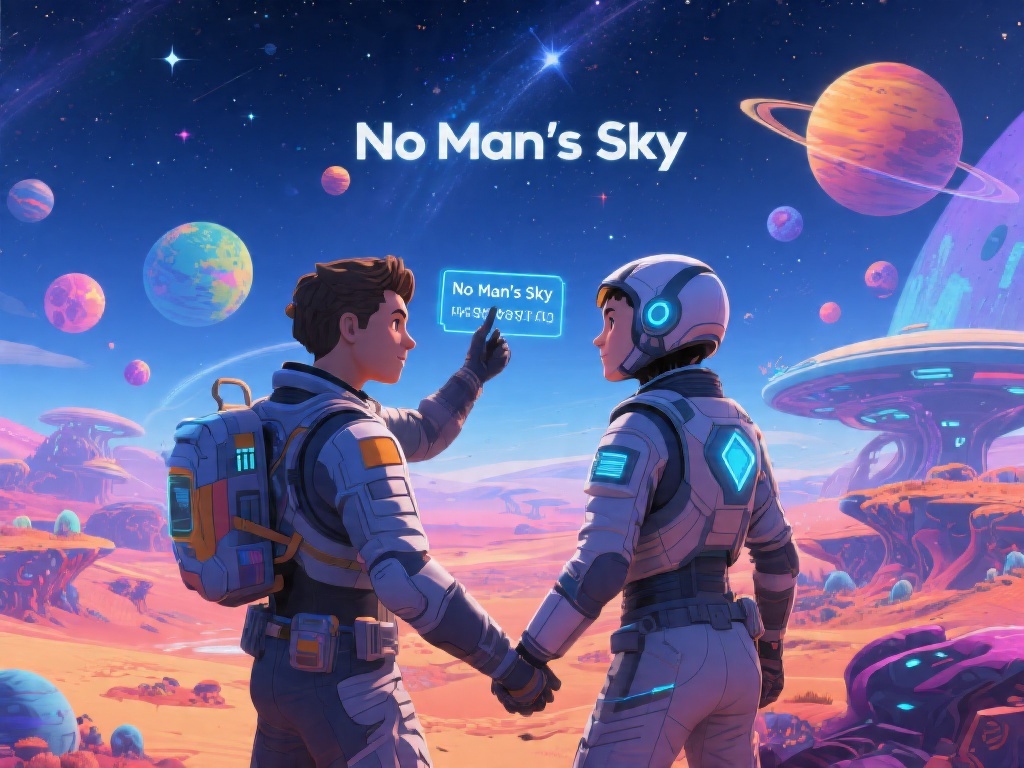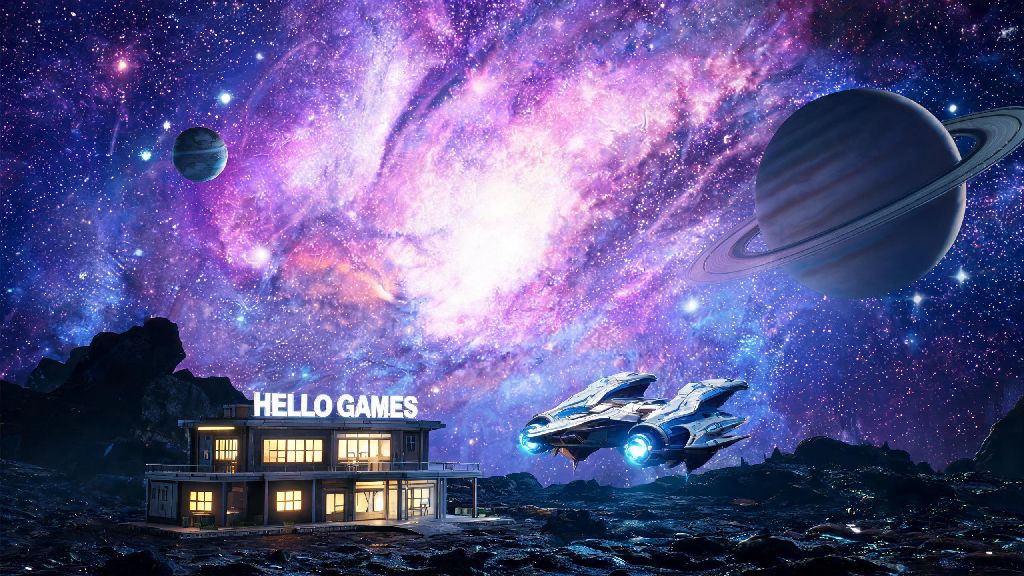
If you’ve spent dozens of hours jumping between star systems, trading rare resources with alien species, or building sprawling bases on uncharted planets, you’ve probably wondered at least once who made No Man’s Sky. The procedurally generated space exploration title has one of the most dramatic comeback stories in gaming history, going from a divisive launch to one of the most consistently supported games on the market. Over 18 quintillion planets to explore, regular free content drops, and a thriving cross-platform multiplayer community make it easy to see why the game still has millions of active players nearly a decade after its first release.
Who Made No Man’s Sky? Meet Hello Games, the Small Studio Behind the Big Space Dream
The team behind No Man’s Sky is Hello Games, a small independent studio based in Guildford, UK, founded in 2008 by four former EA employees. Lead creator Sean Murray first got the idea for a massive open-world space game while working on the Burnout racing franchise, where he grew frustrated with the limits of linear, scripted game design. The four-person core team spent their first few years making the colorful stunt platformer Joe Danger to earn enough funding to pursue their bigger space game idea.
I still remember the backlash when the game first launched, and I wrote off No Man’s Sky for three years before a friend convinced me to try it again in 2020. I was blown away by how much it had changed, and I’ve put over 200 hours into it since then. The studio’s early development process was chaotic, to say the least: they worked out of a tiny shared office, and a flood in 2013 nearly destroyed all of their procedural generation technology that powers the game’s endless universe. They showed the first demo of No Man’s Sky at E3 2014, and the overwhelming fan response put immense pressure on the small team to deliver on their ambitious promises.
The Turbulent Launch and Years of Post-Launch Support
When No Man’s Sky launched in 2016, many of the features fans expected to see were missing, including multiplayer, base building, and deep story content. Player feedback was overwhelmingly negative, and the studio faced widespread criticism for overpromising during pre-release marketing. Instead of abandoning the project or issuing empty apologies, the team retreated from social media and spent the next six years releasing 20+ completely free content updates to add all the promised features and much more.
Many fans pass the time waiting for new update patches to install or for large open-world planets to load by playing short, casual games that don’t require much focus. Casual card game fans in the No Man’s Sky community often turn to Love Rummy for quick, low-stakes matches that fit perfectly into small gaps between exploration sessions. It’s the kind of low-pressure fun that pairs perfectly with the slow, meditative pace of No Man’s Sky’s exploration loops.
Major updates over the years have added everything from fully functional cross-platform multiplayer to customizable freighter bases, alien settlement management, land and space combat overhauls, and even virtual reality support. The studio has stuck to their promise of no paid DLC or season passes for the game, with every single content drop available for free to anyone who owns the base game. Today, the game sits at a 90% positive user rating on Steam, a nearly unheard of turnaround for a title that launched with such a negative reception.
What Makes No Man’s Sky’s Development Approach So Unique?
Hello Games’ handling of No Man’s Sky is almost unheard of in the modern gaming industry, where most live service titles rely on repeated paid content sales to generate revenue long after launch. Their approach stands out for three key reasons:
This approach has earned Hello Games a level of trust from players that most big-budget studios can only dream of. When they announce new features or future projects, fans believe they will deliver, even if it takes longer than expected. The studio has also stayed intentionally small, with only around 30 employees total, to avoid the corporate red tape that slows down development at larger game companies.
What’s Next For the Team That Made No Man’s Sky?
Even after years of supporting No Man’s Sky, Hello Games isn’t slowing down. They announced their next major project, upcoming fantasy title Light No Fire, in 2023. Like No Man’s Sky, it uses procedural generation to create a massive, explorable world, but this time the entire game takes place on a single, continuous fantasy planet that is larger than the real Earth. The team has said they want to push the limits of procedural technology even further, with more detailed biomes, deeper NPC interactions, and collaborative multiplayer building features.
That doesn’t mean they’re abandoning No Man’s Sky, though. Murray has stated repeatedly that the team still has a long list of features they want to add to the game, and they plan to keep releasing regular free updates for the foreseeable future. They still have weekly team meetings to brainstorm new ideas for No Man’s Sky, and they prioritize fan feedback when planning upcoming update content.
The studio has also started supporting smaller independent game projects from other creators, using their funding and industry experience to help other small teams bring their ambitious ideas to life. They’ve said they want to stay true to their indie roots, even as their own games have become massive commercial successes.
At the end of the day, the answer to who made No Man’s Sky is more than just a small UK studio called Hello Games. It’s a team of passionate creators who refused to give up on their vision, plus a community of players who stuck with them through the rough spots to build something truly special. Whether you’re a new player just starting your first interstellar journey or a veteran who’s been around since launch, there’s never been a better time to dive into the endless universe the team built. The next big update is always just around the corner, and the universe is still expanding every single day.