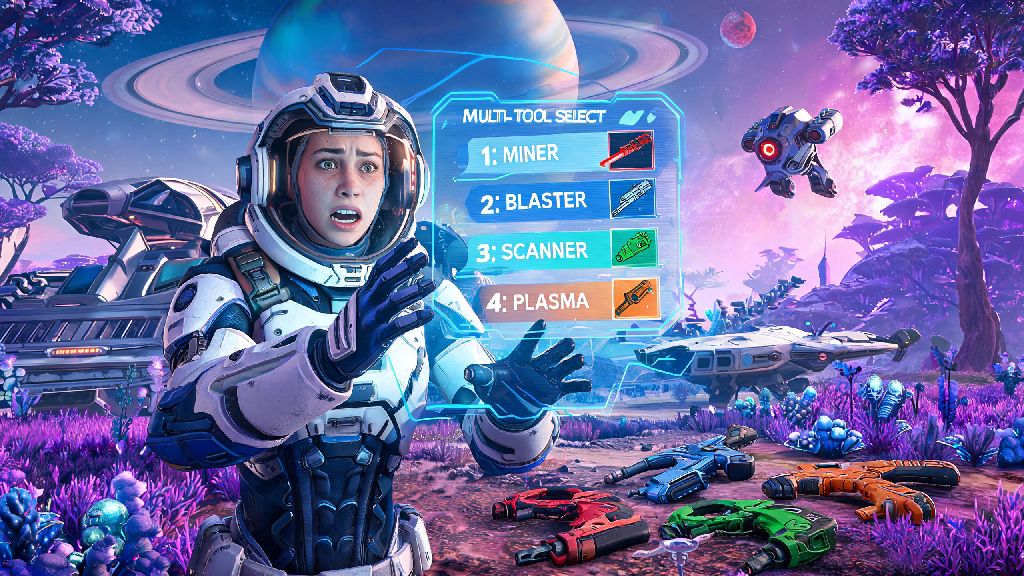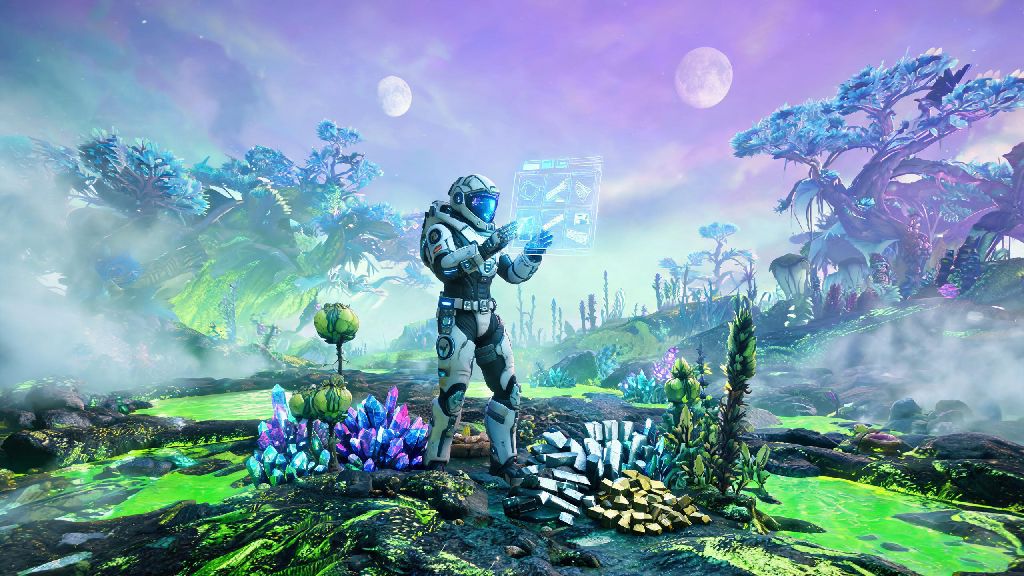
If you’ve ever stared up at the starry sky while standing on a toxic alien planet in No Man’s Sky, you’ve probably wondered how big is No Man’s Sky map, and if it’s even possible to visit every corner of it. Hello Games’ procedurally generated space sandbox has built a reputation for nearly endless content, but many players are surprised to learn just how large the playable area really is, even after years of post-launch updates. We’ll break down the hard numbers, real-world travel times, and practical exploration tips to help you navigate the galaxy without feeling overwhelmed.
Exact Numbers: How Big Is No Man’s Sky Map By Planet Count
When people ask how big is No Man’s Sky map, this 18 quintillion number is usually the first stat cited, but it doesn’t tell the full story. The game uses a deterministic procedural generation algorithm that creates every planet, moon, star system and galaxy from a fixed seed, meaning the same planet will exist for every player who visits its coordinates. 18,446,744,073,709,551,616 unique planets exist across the game’s full map, each with its own unique terrain, flora, fauna, weather patterns and resource spawns.
To put that number in perspective, if you visited one planet every second without stopping, it would take you roughly 585 billion years to see every single one. That’s more than 42 times the current age of the universe. 99.9% of No Man’s Sky planets have never been seen by a human player, and it’s statistically impossible for the entire player base to visit even a tiny fraction of them over the game’s lifetime. Even players who have logged thousands of hours have barely scratched the surface of the full map.
Real-World Time to Cross the No Man’s Sky Galaxy
Raw planet counts don’t mean much if you don’t know how long it takes to travel between locations. Each star system is separated by anywhere from 5 to 500 light years, and a standard unupgraded hyperdrive can jump roughly 100 light years per warp. Each warp, including load times and system entry animations, takes around 30 seconds to complete from start to finish.
A single galaxy in No Man’s Sky spans 100,000 light years from edge to edge, so even if you take the straightest possible route with no detours, it would take you roughly 1,000 jumps and 8 hours of continuous play to cross one galaxy end to end. If you’re stopping to explore planets along the way, that time jumps to hundreds of hours per galaxy. There are 255 unique galaxies in total, unlocked by reaching the center of the previous one.
Many players take short breaks between long exploration runs to avoid burnout, especially if they’re grinding jumps to reach the galaxy center. Casual quick-play games that fit into 5 or 10 minute gaps are perfect for these breaks, so you don’t lose your momentum or get bored of repeating the same jump sequence. A lot of space sandbox fans we know enjoy a quick round of Jaiho Rummy between hyperdrive jumps to refresh their focus before getting back to their exploration route.
You can cut travel time down significantly with upgraded hyperdrives and black hole jumps, but even with the best possible upgrades, crossing all 255 galaxies would take hundreds of hours of focused travel, with no time spent exploring planets or completing side content. That’s before you account for new galaxies added in post-launch updates, which expand the map even further.
Practical Tips for Exploring the No Man’s Sky Map Efficiently
No matter what your exploration goals are, understanding how big is No Man’s Sky map will help you set realistic targets instead of getting discouraged by the endless stretch of space. You don’t have to try to see everything to have fun, but these tips will help you make the most of your exploration time without wasting hours on unnecessary detours:
Black holes are one of the fastest ways to cover long distances, as they jump you roughly 10,000 light years closer to the galaxy center in one go. Be warned though, black hole jumps will randomly damage one of your ship’s components, so always carry extra repair materials with you if you plan to use them for fast travel. You can also use portal glyphs to jump directly to any planet you have coordinates for, which is the fastest way to reach specific points of interest across the galaxy.
Common Myths About the No Man’s Sky Map Debunked
There are a lot of misperceptions floating around about the game’s map size and how procedural generation works, so we’re clearing up the most common myths we see from new players. First, you don’t have to explore every planet to “beat” the game. The main story only requires you to visit a small handful of systems, and you can complete all core content without ever wandering far from your starting galaxy if you don’t want to.
Another common myth is that planets are just copy-pasted versions of each other with different color palettes. While there are shared biome templates, every planet has unique terrain generation, cave systems, fauna spawns and resource distributions, so no two planets feel exactly the same when you land on them. Some players spend dozens of hours on a single planet building bases, farming resources and documenting all the local fauna, without ever feeling like they’ve run out of things to do.
The most persistent myth we see is that updates erase existing planets or change the map layout. Your existing saved locations and bases will never be removed from the map, even after major game updates. The procedural generation seed remains the same across all updates, so any planet you visited in the first year of launch will still be there, in the exact same location, with all your builds intact. Updates only add new biomes and features to previously unused parts of the generation algorithm, so they expand the map rather than changing existing content.
At the end of the day, how big is No Man’s Sky map is less of a technical question and more of a testament to how much creativity procedural generation can bring to a sandbox game. You don’t have to rush to see every part of it, even a single planet can offer hours of fun if you take the time to explore its caves, collect its resources, and build a small base to call home. Whether you’re aiming to reach the center of the 255th galaxy or just spend an hour each weekend wandering random planets, the game’s massive map has something for every type of player.